


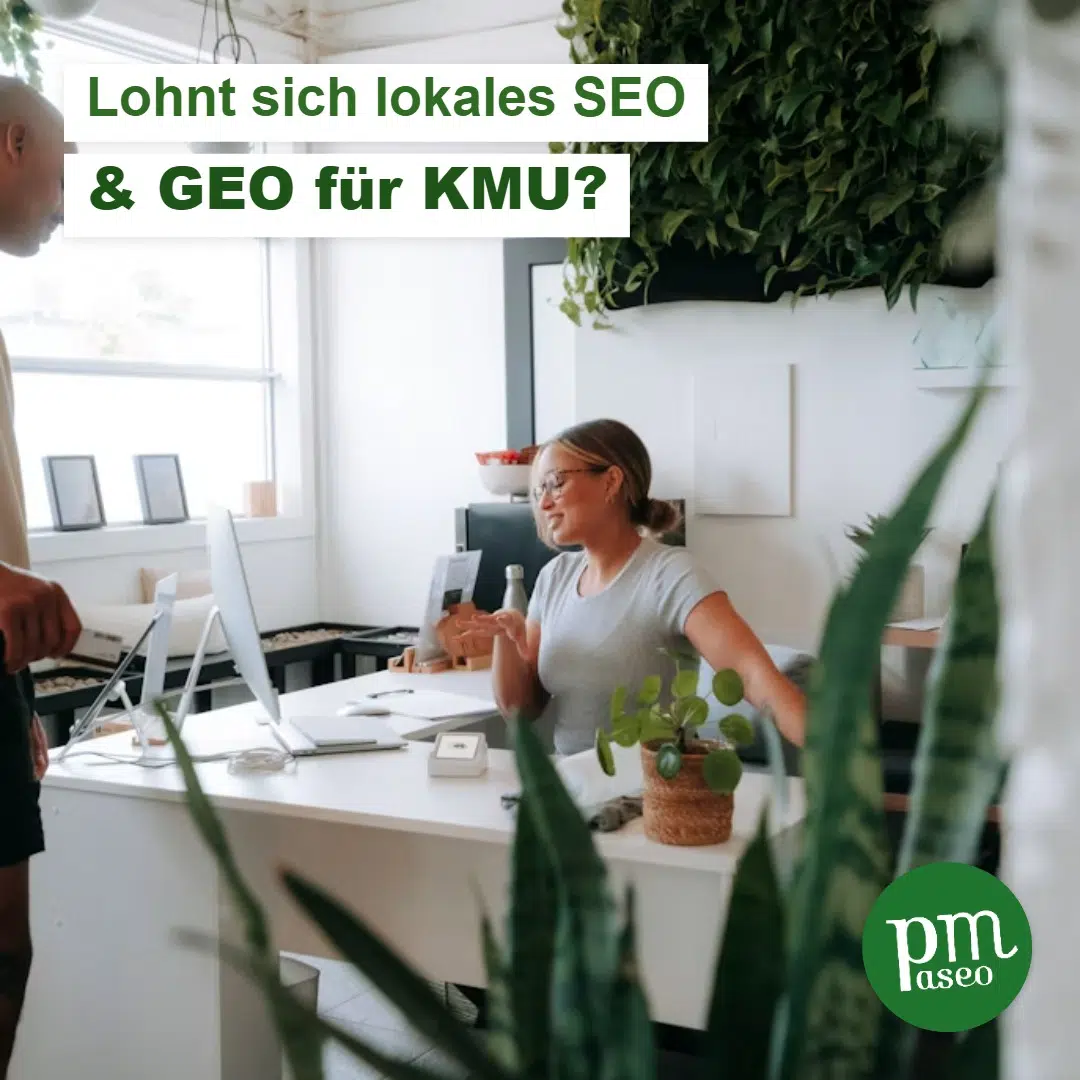
Why Local SEO / GEO Is Essential for SMEs
Imagine a potential customer searching in your city for exactly the service you offer—but your business doesn’t appear in the search results or in AI search. This missed opportunity happens thousands of times every day when small and medium-sized businesses (SMEs) neglect local SEO. In an era when 97% of people search online for local businesses, optimizing your local online presence is no longer a luxury—it’s a business necessity.
Local SEO and GEO (optimization for large language models) are the key to gaining visibility in your region and reaching customers exactly when they’re searching for your products or services. The goal is clear: drive more qualified traffic to your website and maximize your reach in your immediate area. Unlike traditional advertising, local SEO aims to reach people who are already ready to buy—people who are actively searching for solutions that you can provide.
The good news? You don’t have to hire an expensive agency to succeed with local SEO. With the right tips, targeted strategies, and a little patience, even small businesses with limited budgets can achieve impressive results. This guide will show you practical, actionable steps that will boost your local visibility and bring more customers to your business. You’ll learn all about key ranking factors, the importance of an optimized business profile, and how to improve your ranking in local search results.
Local SEO works by combining various online signals: your Google Business Profile, your website content, customer reviews, local backlinks, and the consistency of your business information across the web. Together, these elements send a strong signal to search engines that your business is relevant, trustworthy, and a good fit for local search queries. Implementing these measures doesn’t require extensive expert consultation—you can handle many of these tasks yourself.
Key Points at a Glance
- Local SEO makes small and medium-sized businesses visible where customers shop: in their region. It reaches people with a specific intent to buy, not just an anonymous audience.
- The Google Business Profile is the most important factor. A complete, well-maintained profile determines your ranking in the Local Pack.
- Consistency beats short-term action: Consistent NAP data (name, address, phone number) across all platforms is a key indicator of trust.
- Reviews have a twofold effect. They improve your ranking and convince people. Never buy reviews or links.
- There are many steps you can take on your own. Maintaining your profile, getting reviews, and creating local content mainly take time, not a large budget.
What is local SEO, and why is it important?
Local SEO for small and medium-sized businesses refers to all measures that improve your online visibility in geographically relevant search queries. If someone in your city searches for “bakery near me” or “plumber in Munich,” local SEO determines your visibility. What’s new is that these searches no longer take place exclusively on Google. ChatGPT, Perplexity, and Google AI Overviews also answer local questions. Local optimization in AI search is thus becoming the second pillar of your regional visibility.
Unlike general SEO, local SEO focuses on a specific geographic area. This makes it particularly valuable for small and medium-sized businesses with customers in the immediate vicinity. These include restaurants, hair salons, dental offices, and local service businesses. The benefits are clear: targeted traffic, higher conversion rates, and more efficient marketing spend.
Search engines like Google use special algorithms for local searches based on three key ranking factors: relevance, distance, and visibility. Relevance measures how well your listing matches the search query. Distance measures how close you are to the searcher. Visibility measures how prominent your business is online. These factors determine your ranking in local search results and in the so-called “Local Pack”—the three businesses that Google prominently displays on a map.
AI systems work similarly, but not identically. They often provide just a single recommendation instead of ten blue links. Their answers are based on existing data: business profiles, reviews, directories, and clearly written website content. Local optimization in AI search therefore starts with exactly the same fundamentals as traditional local SEO. Those who do this properly will also be cited as a source by AI assistants.
The beauty of local SEO is that you’re not competing with large national chains, but rather for visibility in your region. This makes the competition more manageable. Local searches also often have higher conversion rates because users have specific purchase intentions and want to act quickly. This effect is even more pronounced in AI search. Those who appear as recommendations there often win over customers without having to go through a list of results.
Local SEO works by combining various online signals: your Google Business Profile, your website content, customer reviews, local backlinks, and consistent business information across the web. Together, these elements signal to search engines and AI systems that your business is relevant and trustworthy. You can implement many of these measures yourself, without needing extensive expert advice.

The Basics of Local Search Engine Optimization and LLMO
Before diving into specific tactics, you should understand the fundamental principles that make local SEO successful for small and medium-sized businesses. These fundamentals form the foundation of any effective local SEO strategy and are crucial for long-term success. A thorough analysis of these factors is the first step toward improving your online presence.
Consistency as a Cornerstone
The first cornerstone is consistency. Your business information—especially your name, address, and phone number (NAP)—must be identical across the entire internet. Inconsistent information not only confuses potential customers but also search engines, which negatively impacts your ranking. This consistency must be maintained across your website, your Google Business Profile, social media profiles, and all online directories. Each listing should contain exactly the same information.
Demonstrate relevance
The second pillar is relevance. Your online presence must clearly communicate what services you offer and to whom. This means you should use specific, local keywords that describe your services and your location. For example, a physical therapist in Hamburg should use terms like “physical therapy Hamburg Altona” or “back pain treatment Hamburg,” rather than just general terms like “physical therapy.” This targeted approach significantly improves your search rankings.
Building Trust and Authority
The third pillar is trust and authority. Search engines favor businesses that are considered trustworthy and well-established. You build this trust through positive customer reviews, high-quality backlinks from local websites, an active social media presence, and regularly updated content. The more positive signals search engines receive about your business, the higher your ranking will be. The importance of these ranking factors for your reach cannot be underestimated.
Optimize the User Experience
Another important aspect is user experience. Your website should load quickly, be mobile-friendly, and be easy to navigate. Google considers user experience a key ranking factor, and poor technical performance—especially slow load times —can undermine even the best content and SEO efforts. This is particularly critical for local searches, since many users search on their smartphones while on the go. An optimized website is the goal of every successful SEO strategy.
Local Content
After all, local content is essential. Create content that’s relevant to your local audience—blog posts about local events, guides to your city or region, and customer stories from your area. This local focus helps search engines understand your geographic relevance while also providing value to your potential customers. If you follow these tips and continuously work to optimize your presence, you’ll see significant improvements in your local visibility.
How to Set Up and Maintain Your Google Business Profile Effectively
Your Google Business Profile (formerly Google My Business) is the most important local SEO tool for small and medium-sized businesses. It’s the first thing potential customers see when they search for your business or similar services, and it plays a key role in determining whether you appear in the coveted Local Pack. The importance of a fully completed and optimized business profile for your ranking in search results cannot be overstated.
Claim and verify your profile
The setup process begins by claiming your profile on Google. Search for your business name—if an entry already exists, you can claim it. If not, create a new profile. Google will verify your ownership via a postcard, a phone call, or an email. This verification process is essential and should be your top priority. Many small and medium-sized businesses overlook this basic step, causing them to lose valuable traffic.
Provide complete information
Once verified, fill out every single field completely—this is one of the most important steps for local SEO. Choose the categories that best fit your business—the primary category is especially important and should accurately describe what you do. Add a detailed description that naturally includes your most important keywords but is written primarily for people. This description should clearly communicate your services and the benefits for customers. Don’t forget to list your business hours, which should be updated during holidays.
Take Advantage of Professional Support
Would you like to have your Google Business Profile professionally optimized? The experts at Paseo Marketing can help you fully set up and continuously maintain your Google My Business profile. From verification to strategic keyword integration to review optimization—learn more about Paseo Marketing’s professional Google My Business optimization services and how they can help you maximize your local visibility.
Include high-quality photos
Photos are a key factor in your profile’s engagement rate and are important ranking factors. Businesses with photos receive 42% more requests for directions and 35% more clicks to their website—which translates to significantly more traffic. Upload high-quality photos of your store, your products, your team, and your work. Update these photos regularly to show that your business is active. Authentic photos often work better than professional stock photos because they build trust and demonstrate your local roots.
Use Google Posts
The Google Posts feature is often overlooked, but it’s valuable for continuously optimizing your profile. Use Posts to share special offers, events, news, or blog articles. These posts appear directly on your Google Business Profile and signal that your business is up to date. Plan to post at least once a week to keep your profile active. These regular updates are important steps that increase your reach and show that your business is active.
Actively Manage the Q&A Section
Be proactive in answering questions in the Q&A section. Add frequently asked questions and answer them yourself before customers ask them. When customers ask questions, respond quickly and helpfully. This section demonstrates engagement and provides valuable information to potential customers. Of course, you can also incorporate relevant keywords here and describe your services in detail. If you need support with strategic consulting and implementation, a specialized agency like Paseo Marketing can help take your profile to the next level.
Ongoing Care
Maintaining your profile doesn’t end once it’s set up. Check regularly to make sure all information is up to date, respond to reviews (more on that later), and monitor the insights Google provides about your profile’s performance. This data shows you how customers find you, what actions they take, and where there’s room for improvement. Continuously analyzing these metrics is key to long-term success in local SEO.

Strategically Research and Use Local Keywords
Keyword research is the foundation of any successful SEO strategy, and it has its own unique considerations when it comes to local SEO for small and medium-sized businesses. You need to understand how people in your region search for your products or services and incorporate these insights into your overall online presence. A thorough analysis of the right keywords is crucial for generating qualified traffic and improving your search rankings.
Brainstorming and Local Combination
Start by brainstorming your main services or products and combine them with geographic terms. For example, a dentist in Cologne would research keywords such as “dentist Cologne,” “teeth cleaning downtown Cologne,” or “emergency dentist Cologne.” Also consider neighborhood-specific terms, since many people search for services in their immediate area. These local keywords are particularly valuable for small and medium-sized businesses, as they attract highly relevant traffic with strong purchase intent.
Use Free Tools
Use free tools like Google Keyword Planner, Ubersuggest, or AnswerThePublic to generate keyword ideas. These tools show you which terms people are actually searching for and how strong the competition is. A professional agency would charge substantial fees for this kind of analysis, but you can conduct this basic research yourself. Pay special attention to long-tail keywords—longer, more specific search phrases such as “vegan restaurant Prenzlauer Berg Berlin” or “24-hour locksmith service Frankfurt Sachsenhausen.” These often have less competition and higher conversion rates, which means better results when implementing your SEO strategies.
Take local variations into account
One aspect that’s often overlooked is researching local variations and dialects. People in different regions use different terms for the same things. In Munich, you might say “Fleischer,” while in Hamburg, “Metzger” is more common. Understand the linguistic nuances of your region and incorporate them into your keyword strategy. These tips will help you maximize your reach within the local community.
Conduct a Competitive Analysis
Be sure to take a look at your competition as well. What keywords do successful local competitors use? Which terms do they rank for? Tools like SEMrush or Ahrefs offer competitive analysis, but you can also conduct manual research by entering relevant search queries into Google and analyzing the websites that appear at the top of the results. Find out which strategies work for others, and adapt them to your own business.
Understanding Search Intent
The search intent is crucial for successfully optimizing your content. Consider whether someone searching for a specific keyword is looking for information, wants to make a purchase, or intends to visit a location. “Hair salon prices in Hamburg” suggests a search for information, while “Hair salon in Hamburg open now” signals a clear intention to visit. Create content that aligns with these different intents to generate maximum traffic.
Prioritization and Integration
Once you have your keyword list, prioritize the keywords based on relevance, search volume, and realistic ranking potential. As an SME, you should initially focus on less competitive keywords where you can actually rank. A single successful ranking for a medium-volume keyword can deliver more value than fighting for a high-volume keyword where you end up on page five. Implementing this strategy is the key to achieving sustainable improvements.
Integrate your local keywords naturally into your website—in headings, body text, meta descriptions, image alt tags, and URLs. This is a key component of on-page optimization. But don’t overdo it. Keyword stuffing does more harm than good. Write primarily for people, not for search engines, and use keywords where they fit naturally. The importance of natural integration cannot be underestimated.

On-Page Optimization for Local Searches
On-page SEO refers to all the optimization measures you can take directly on your website to improve your ranking. For local SEO for small and medium-sized businesses, this means designing your website so that it works optimally for both search engines and local customers. On-page optimization is one of the most important ranking factors and, at the same time, one of the most controllable aspects of your SEO strategy.
Optimize Your Website
Start with the homepage. It should clearly communicate what services you offer and where you provide them. Prominently feature your location—ideally in the H1 heading, the introductory text, and the meta description. Avoid generic statements like “We are your reliable partner” and be specific: “Your master roofing contractor in Nuremberg and the surrounding area since 1995.” This specificity not only helps with local SEO but also immediately communicates the benefits to potential customers.
Create Location-Specific Pages
Create location-specific pages if you serve multiple locations. Each location should have its own unique page with specific content—not just a copy with the location name swapped out. Describe what makes that location special, add local references, show photos of the local team or office, and list location-specific reviews. These steps will improve your rankings for each individual location and significantly increase local traffic.
Optimize the Contact Page
Your contact page is invaluable for local SEO and should be treated as a key page on your website. Make sure your full address appears in the text (not just as an image), ideally formatted with Schema markup. Embed a Google Map showing your location. Include detailed directions for both public transportation and driving, and list parking options. These details not only help customers but also signal your local relevance to search engines. This page is of enormous importance to your overall local SEO strategy.
Perfecting Meta Tags
Meta tags are your chance to stand out in search results and generate more traffic. The title tag should include your main keyword and your location and be less than 60 characters long. The meta description should be written in an engaging way, include a clear call to action, and incorporate local keywords. Although meta descriptions aren’t a direct ranking factor, they influence the click-through rate, which indirectly improves your ranking. This is a simple change with a big impact.
Use the header structure
Header tags (H1, H2, H3, etc.) structure your content and are important ranking factors for on-page optimization. Use a single H1 tag per page that includes your main keyword. H2 and H3 tags should organize your content logically and, where appropriate, include local keywords and variations. This structure helps search engines understand your content and improves readability for visitors. A well-optimized hierarchy is the key to better rankings.
Implement Schema Markup
Schema markup is structured code that helps search engines better understand your content—an often-overlooked aspect of on-page optimization. For local businesses, the LocalBusiness schema is essential. It provides detailed information about your business—hours of operation, address, phone number, accepted payment methods, and services offered. You can add Schema markup manually or use plugins like Yoast SEO or Rank Math, which simplify the process. If you need assistance with this, consulting with a specialized agency may be helpful, but there are also many resources available to help you learn how to implement it yourself.
Optimize loading times
Page load times are a critical on-page factor that is often underestimated. Slow websites lead to higher bounce rates and lower rankings. Optimize images, minimize CSS and JavaScript, use caching, and consider a Content Delivery Network (CDN). Google PageSpeed Insights provides specific tips for improving your load times. This technical optimization is particularly important for mobile users, who account for the majority of local searches.
Using Internal Links Strategically
Don't forget the internal linking as part of your on-page strategy. Link from your homepage to important subpages, from blog posts to your service pages, and from location-specific pages to one another. Use descriptive anchor text that explains where the link leads. A good internal linking structure distributes SEO value across your entire website and helps users find relevant information. This measure improves both the user experience and your visibility in search engines.
NAP Consistency: Name, Address, and Phone Number Are Consistent Everywhere
NAP consistency sounds simple, but it’s surprisingly often overlooked and can have a significant impact on your local SEO for small businesses. NAP stands for Name, Address, and PhoneNumber—the three most critical pieces of information for local businesses and fundamental ranking factors. The importance of consistent business information across all online channels cannot be overstated.
Why NAP Consistency Is Important
Why is this so important? Search engines use NAP data as a trust signal and to improve local search results. If your business is listed with the same information across the web, it boosts your credibility in Google’s eyes. Inconsistent information, on the other hand, raises doubts about whether you’re a legitimate, active business, which can harm your ranking and reduce your traffic. This consistency is one of the most fundamental steps for successful local SEO implementation.
Conduct a NAP Audit
Start with a NAP audit —a thorough analysis of all your online listings. Google your business name and check how your information appears on various websites. Pay special attention to your Google Business Profile, your website, Facebook, Yelp, Yellow Pages, and industry-specific directories. Make a note of any inconsistencies—even small differences like “Street” vs. “St.” or different spellings can be problematic and negatively impact your ranking.
Set the default format
Define a standard NAP format and stick to it consistently. Decide whether to use abbreviations or spell out full terms, how to format your phone number (with or without hyphens, with or without a country code), and whether to include suite or floor numbers. Document this format and share it with everyone who manages your online presence. This consistent implementation should be the goal for all your online listings.
Correct the most important listings
Start by correcting the most important listings —these actions have the greatest impact. Your Google Business Profile is the top priority, followed by your website and major directories such as Bing Places, Apple Maps, and Yelp. On many platforms, you can edit the information directly. On others, you may need to verify ownership or contact support. Every corrected listing improves your chances of achieving better rankings and increasing your reach.
Use Listing Management Services
For smaller listings or those that are difficult to manage, listing management services can be helpful. Services like Yext, Moz Local, or BrightLocal automatically distribute your information to hundreds of directories and keep it synchronized. If you work with an SEO agency, they often offer these services. While this does cost money, it can save you a significant amount of time, especially if you have multiple locations. The benefits of centralized management of your local listings are considerable.
Check Unexpected Sources
Also keep an eye out for unexpected places where your NAP data might appear—every listing counts toward your on-page and off-page optimization. Press releases, sponsorship mentions, event listings, chamber of commerce memberships—all of these can include your business information. Whenever you’re mentioned anywhere, make sure the information is accurate. This consistency is one of the most important tips for sustainable local SEO success.
Act quickly when changes occur
An often-overlooked aspect: When you move or change your phone number, acting quickly is critical to maintaining your rankings. Update your information everywhere at the same time, whenever possible. A move can temporarily impact your local SEO, but consistent, prompt updates minimize the impact. If possible, keep your old number for a few more months and set up call forwarding to your new number to give customers and listings time to update their records. This strategic approach protects your hard-earned traffic.
Build Local Backlinks and Strengthen Relationships
Backlinks —links from other websites to yours—are a cornerstone of SEO, and local backlinks are particularly valuable for local SEO for small and medium-sized businesses. A link from a trusted local website signals to search engines that you are an established, respected member of your business community. These steps to improve your off-page optimization have a direct impact on your rankings and reach.
Take Advantage of Low-Hanging Fruit
Start with the low-hanging fruit: local industry associations, the Chamber of Commerce, economic development organizations, and local business networks. Membership in such organizations often automatically results in a backlink from their website. These links are high-quality, thematically relevant, and demonstrate a local presence—all important ranking factors for local SEO.
Reach out to local media
Local media and blogs are invaluable for building your local authority. Reach out to local news sites, city magazines, community blogs, and lifestyle websites. Offer to be quoted as an expert, write guest posts on topics in your area of expertise, or suggest stories that would interest their readers. For example, a baker could offer an article on “The History of Artisan Bread in Our City.” These posts not only generate backlinks but also increase your visibility and traffic.
Using Sponsorship Strategically
Sponsorship is a win-win situation for both parties. Sponsor local sports clubs, school events, charities, or community events. You support your community, increase your brand awareness, and many of these organizations list sponsors on their websites with backlinks. Choose sponsorships that align with your brand and where your target audience is active. These local connections are crucial to your SEO strategy.
Involve educational institutions
Local universities and educational institutions often offer unexpected backlink opportunities. Can you offer internships? Provide a guest speaker for a class? Hire graduates? Many educational institutions list partners and employers on their websites. In addition, .edu domains often have high authority, which makes these links particularly valuable and positively impacts your search rankings.
Involve Business Partners
Suppliers and business partners likely already have a business relationship with you. Ask them if they can list you on their “Customers” or “Partners” page, with a link to your website. In return, offer to link to them on your site. Such reciprocal relationships strengthen both sides and reflect authentic business networks—a signal that search engines value.
Create Linkable Content
Create link-worthy local content. Develop resources that are so valuable that others will want to link to them: a comprehensive guide to your city, a list of the best [your industry] in the region, infographics with local statistics, or case studies featuring local clients (with their permission). This type of content naturally attracts links, especially if you actively promote it to relevant websites. These content creation tips will increase both your reach and your organic traffic.
Show Community Involvement
Community involvement is authentic link building with long-term value. Organize local events, participate in city initiatives, and get involved in local discussions and projects. Genuine engagement in your community naturally leads to mentions and links on event websites, news articles, and community platforms. It is more sustainable and effective than artificial link building and brings additional benefits for your brand awareness.
Avoid Poor Practices
Avoid poor linking practices that can harm your ranking. Don’t buy links, don’t participate in link farms, and avoid irrelevant directories that exist solely for SEO purposes. Quality trumps quantity when it comes to backlinks. A single link from a respected local institution is more valuable than dozens of links from low-quality sources, which can actually harm your ranking. Focus on building genuine relationships and providing value.
Generate and Manage Online Reviews
Reviews are digital word-of-mouth and are essential for local SEO for small and medium-sized businesses. They directly influence your ranking, your click-through rate, and ultimately your conversion rate. Studies show that 88% of consumers trust online reviews just as much as personal recommendations. The importance of active review management cannot be overstated—it is one of the most important ranking factors for local SEO.
Balancing Quantity and Quality
Both the quantity and quality of reviews are important for your ranking. Google and other platforms favor businesses with many recent reviews. But a few dozen authentic, detailed reviews are more valuable than hundreds of generic one-sentence reviews. Aim for steady growth in reviews, not a sudden spike that might seem unnatural. This consistent approach is the key to sustainable success.
Actively Ask for Reviews
The easiest way to get reviews is to ask for them. Most satisfied customers won’t write a review on their own, but they’re happy to do so if you ask them politely. Train your team to ask for reviews after positive interactions. The best time to do this is right after a service is completed or a delivery is made, when satisfaction is still fresh. This simple step can significantly increase your review rate.
Simplify the process
Make it as easy as possible for customers. Send customers a direct link to your Google Review form, not just to your profile. You can generate these links through your Google Business Profile. Use QR codes on receipts, business cards, or in-store. The fewer steps required, the more likely someone is to actually leave a review. These tips for optimizing the review process will increase your success.
Use Email Follow-ups
Automated review requests via email can be effective, but they must be used with caution. Send personalized emails, not mass spam. Mention the specific service or product the customer received. Offer multiple-choice options—if someone is dissatisfied, give them the opportunity to contact you directly instead of leaving a negative public review. This strategic approach protects your reputation.
Respond to all reviews
Respond to every review —both positive and negative. For positive reviews, thank the reviewer personally and specifically. Mention details from the review to show that you’ve actually read it. For negative reviews, remain professional, apologize for the bad experience, and offer a solution. Take the conversation offline after your initial response. These responses show potential customers that you take feedback seriously and are important signals to search engines.
Use various platforms
While Google reviews are the most important for local SEO, don’t neglect other platforms. Yelp, Facebook, industry-specific directories, and review sites all play a role. Encourage customers to leave reviews on various platforms, and make sure you actively respond to feedback everywhere. This diversification increases your reach and demonstrates trustworthiness across multiple channels.
Negative Reviews as an Opportunity
View negative reviews as an opportunity for improvement. Analyze patterns in negative feedback—are there recurring issues? Use these insights to improve your services and processes. If you resolve an issue and handle it professionally, dissatisfied customers can sometimes become your most loyal advocates. Professional review management is crucial to your long-term success.
Avoiding Fake Reviews
Never buy fake reviews. Google and other platforms are getting better and better at detecting them, and the penalties can be devastating—ranging from the removal of your profile to permanent drops in rankings. Focus on generating genuine reviews from real customers. Authenticity isn’t just the right thing to do ethically; it’s also the most effective long-term strategy for building trust and improving your rankings.

Use Local Directories and Business Listings
In addition to your Google Business Profile, there are numerous other online directories and platforms where your business should have a presence. These listings support your local SEO for small and medium-sized businesses by providing additional backlinks, increased visibility, and confirmation of your NAP consistency. The strategic use of local directories is an often-underestimated tactic with great potential.
The Most Important Directories
Start with the most important general directories: Bing Places, Apple Maps, Yelp, Yellow Pages, Das Örtliche, and meinestadt.de. These have high authority and are frequently used. A complete listing in these directories improves your chances of being found and strengthens your local presence. Each listing is an opportunity to generate more traffic and increase your reach.
Industry-Specific Platforms
Industry-specific directories are particularly valuable. Identify the most important platforms for your industry—Jameda for doctors, Treatwell for hair and beauty salons, ProvenExpert for service providers, or Houzz for tradespeople. These targeted platforms drive highly relevant traffic from people who are actively searching for your specific services. These specialized listings are crucial for generating qualified leads.
Don't forget local platforms
Don't forget about local platforms and community sites. Many cities and regions have their own business directories, tourism websites, or chamber of commerce listings. These local listings are especially valuable for local SEO because they send strong geographic signals. Search for “[Your City] business directory” or “[Your Region] local businesses” to find relevant platforms.
Consistency Across All Entries
Consistency is key for every listing. Use the exact same NAP information that you use on your website and your Google Business Profile. Fill out every available field—business hours, website URL, description, categories, photos. Complete profiles rank higher and appear more trustworthy to potential customers. This attention to detail when optimizing each listing pays off in the long run.
Update regularly
It's important to update your directory listings regularly. If your hours of operation change, you add new services, or you have special offers, be sure to update this information everywhere. Outdated listings lead to frustrated customers and missed opportunities. Set a quarterly reminder to review all your key listings and update them as needed.
Added Value Through Complete Profiles
Take every opportunity to provide added value. If a directory allows you to share blog posts, post offers, or add FAQs, do so. The more active and complete your profiles are, the better. This additional content gives you more opportunities to incorporate relevant keywords and shows that your business is active and engaged—important factors for your ranking.
Monitoring and Management
Managing a large number of listings can be time-consuming. Listing management tools or working with a specialized agency can be helpful in this situation. These tools help you monitor your listings, alert you to inconsistencies, and make it easier to update them across multiple platforms. If you need advice on how to efficiently manage your directory listings, professional support can be a good investment.
Content Marketing with a Local Focus
Content is still king, even in local SEO for small and medium-sized businesses. By creating high-quality, locally relevant content, you can not only improve your rankings but also provide real value to your target audience. Content marketing is one of the most sustainable ways to increase your organic reach and establish yourself as a local authority.
Blog on local topics
A company blog is ideal for local content marketing. Write posts about local events, industry news in your region, guides to your city, or stories about local customers and projects (with their permission). These posts provide natural opportunities to incorporate local keywords and demonstrate your geographic relevance to search engines. Regular blog updates also signal that your website is active—a positive ranking factor.
Local Guides and Resources
Create comprehensive local guides that offer real value. A restaurant could create an “Ultimate Guide to Local Food Festivals,” a real estate agent could create a “Neighborhood Guide” with detailed information about different neighborhoods, or a gym could create a “Guide to Outdoor Workout Spots in [City].” Such resources naturally attract backlinks, get shared on social media, and generate long-term traffic. The importance of this kind of evergreen content for your SEO strategy is significant.
Local Case Studies and Success Stories
Case studies and customer stories with a local focus are particularly effective. They demonstrate specifically how you’ve helped local customers, build trust, and provide natural opportunities to incorporate local keywords. Ask satisfied customers if you can share their stories. These authentic stories resonate strongly with your local audience and can significantly improve your conversion rate.
Local Events and News
Stay up to date on local events and developments, and create content about them. If a major event is taking place in your city, write about it from your industry’s perspective. A florist could write about the best floral arrangements at a local festival, while a caterer could cover food trends at city events. This timely content shows that you’re part of the local community and increases your chances of appearing in current search results.
Video content with a local focus
Video content is becoming increasingly important and is ideal for local marketing. Create videos of your location, your team, local events, or tutorials with local relevance. Videos increase the time visitors spend on your website—a positive signal for search engines. Also upload videos to YouTube (the second-largest search engine) and optimize the title, description, and tags with local keywords. Diversifying your content strategy in this way expands your reach across multiple channels.
Locally Focused FAQ Pages
A well-designed FAQ page answers your customers' common questions and is perfect for incorporating local long-tail keywords. Structure your FAQs using Schema markup so they may appear as featured snippets. Answer questions such as “How do I find [your service] in [city]?”, “Which [your service] is most popular in [region]?”, or “How much does [your service] cost in [city]?”. This targeted content captures exactly the search queries your potential customers are asking.
Content Calendar with a Local Focus
Develop a content calendar that takes local events, seasons, and trends into account. Plan posts around local holidays, festivals, sporting events, or seasonal highlights in your region. This strategic planning ensures that you consistently publish relevant content and increases your chances of being found at the right time. Implementing a structured content plan is the key to sustainable content marketing success.
Mobile Optimization and Load Times for Local Searches
Mobile optimization is no longer an optional extra—it’s absolutely essential for local SEO for small and medium-sized businesses. The majority of local searches are conducted on mobile devices, often on the go, with a high intent to purchase. If your website doesn’t function optimally on smartphones, you’ll lose not only traffic but also revenue. The importance of a mobile-optimized presence for your local rankings cannot be overstated.
Mobile-First Approach
Google has been using mobile-first indexing for years, which means that the mobile version of your website is the primary basis for your ranking. Make sure your website is responsive—it should automatically adapt to different screen sizes. Test your website on various devices and browser versions. Google offers a free Mobile-Friendly Test tool that shows you how well your website is optimized for mobile users.
Loading Times Are a Major Issue
Load times are even more critical on mobile devices than on desktops. Mobile users expect ultra-fast load times —studies show that 53% of mobile visitors leave a page if it takes longer than 3 seconds to load. Aggressively optimize images (use modern formats like WebP), implement lazy loading, minimize CSS and JavaScript, and take advantage of browser caching. Google PageSpeed Insights provides specific tips for improving your load times —a fundamental step toward better rankings.
Touch-friendly navigation
Your mobile website must be touch-friendly. Buttons and links should be large enough to be easily tapped with a finger (at least 44×44 pixels). Avoid hover effects, which don’t work on touchscreens. Navigation should be simple and intuitive—mobile users have little patience for complicated menus. A clear, touch-friendly user interface is the goal for an optimal mobile user experience.
Click-to-Call functionality
Prominently feature click-to-call buttons on your mobile website. Local searchers often want to call right away—make it easy for them. Your phone number should be formatted as a clickable link that automatically opens the phone app. This not only improves the user experience but also significantly increases your conversion rate. This simple change can make a big difference for your business.
Prominent Local Information
Screen space is limited on mobile devices. Make sure the most important local information is immediately visible: your address, phone number, hours of operation, and a link to directions. Many mobile users are looking for exactly this information—if they have to scroll or search to find it, they may leave your page. Prominently displaying this information is a key step toward improving your mobile conversion rate.
Making Forms Mobile-Friendly
If you have contact forms on your website, optimize them for mobile use. Keep forms short—ask only for essential information. Use appropriate input types (tel for phone numbers, email for email addresses) so that the correct keyboard appears. Large, clearly visible submit buttons are crucial. Complicated, lengthy forms on mobile devices lead to high abandonment rates.
Consider Core Web Vitals
Google's Core Web Vitals are official ranking factors that measure user experience: Largest Contentful Paint (loading speed), First Input Delay (interactivity), and Cumulative Layout Shift (visual stability). Monitor these metrics in Google Search Console and work on improving them. Especially on mobile devices, good Core Web Vitals are crucial for your ranking and user satisfaction.
Accelerated Mobile Pages (AMP)
Consider using AMP (Accelerated Mobile Pages) for certain types of content, especially blog posts and news articles. AMP pages load extremely quickly on mobile devices, which improves the user experience and sends positive ranking signals. While AMP isn't necessary for every website, it can provide a noticeable benefit for content-heavy pages, particularly in terms of load times and mobile performance.
Using Social Media for Local Marketing
Social media may not be a direct ranking factor for SEO, but it plays an important indirect role in local SEO for small and medium-sized businesses. Social media platforms increase your visibility, drive traffic to your website, provide opportunities to engage with local customers, and can lead to valuable backlinks. Strategic use of social media significantly expands your reach and strengthens your local presence.
Choosing the Right Platforms
Not every platform is right for every business. Make a strategic choice based on where your target audience is active. Facebook remains the dominant platform for local businesses, especially those targeting older demographics. Instagram is ideal for visually oriented industries such as restaurants, fashion, or beauty. LinkedIn is ideal for B2B service providers. TikTok is becoming increasingly important for younger audiences. Focus on 2–3 platforms where you can consistently deliver high-quality content.
Emphasize the local connection
In all yoursocial media posts, you should emphasize your local connection. Use geotags in your posts, tag your location, and use local hashtags such as #BerlinFoodie, #HamburgHandwerk, or #MünchenFitness. Share stories from your region, and highlight local events or client projects. This local focus increases engagement and strengthens your position as a relevant local player.
Post and interact regularly
Consistency is key. Use an editorial calendar to plan your posts and publish content regularly. Respond to comments, messages, and mentions—engagement signals activity and strengthens customer loyalty. Social media also amplifies your content: blog posts, local guides, or events can be shared, driving additional traffic to your website and your Google Business Profile.
Collaborations with local influencers
Local influencers or micro-influencers can significantly increase your reach. Partner with people who are active in your region and have an engaged community. These partnerships generate authentic content, boost your brand awareness, and can create high-quality backlinks that support your local SEO.
Incorporate social proof and reviews
Share positive customer reviews, photos of satisfied customers, or successful projects on your social media channels. Social proof helps build trust and encourages potential customers to use your services. In addition, this strengthens your online presence and can indirectly influence your search engine rankings.
Avoiding Common Mistakes in Local SEO
Even in local SEO, small mistakes can have a big impact on your visibility. A common mistake is inconsistency in business information, such as different addresses, phone numbers, or hours of operation across various platforms. Equally problematic is neglecting reviews: No reviews or unanswered reviews come across as unprofessional and undermine the trust of potential customers. Another pitfall is keyword stuffing —the excessive use of keywords on your website. This can be flagged as spam by search engines and lower your ranking. Also, avoid duplicate content on location-specific pages and make sure to regularly update the information in your Google Business Profile and other directories.
Measuring Success: KPIs and Tracking Tools
Local SEO is only effective if you continuously measure the success of your efforts. Key KPIs (Key Performance Indicators) include: the number of local search queries, clicks on your Google Business Profile, calls via click-to-call, directions requests, online reviews, and your website’s visibility in local search results. Tracking tools such as Google Analytics, Google Search Console, Google My Business Insights, or specialized local SEO tools like BrightLocal or SEMrush help you collect and analyze this data. By regularly analyzing these metrics, you can identify which strategies are working, where there is room for improvement, and how you can continuously refine your strategy.
Local SEO is your most cost-effective way to attract customers and your ticket to AI search
Local SEO for small and medium-sized businesses isn’t a one-time project—it’s an ongoing process. The good news is that you don’t have to implement everything at once. Start with your Google Business Profile, because no other strategy delivers results faster. Next, ensure your NAP information is consistent and actively manage your reviews. Only then should you move on to local content, directories, and building regionalbacklinks.
This approach has a second advantage. AI systems now use exactly the same signals. ChatGPT, Perplexity, and Google’s AI Overviews are increasingly providing local recommendations. To do so, they draw on reviews, profiles, structured data, and clear website content. Anyone who practices solid local SEO today is automatically improving their visibility in AI search. You don’t need a second, separate project to achieve this.
Be realistic about this. You’ll start to see initial results after a few weeks, and stable rankings after a few months. Measure your progress using clear metrics: phone calls, directions requests, and inquiries via the website. This will help you identify which strategies are actually bringing in customers.
Note:Localvisibility today relies almost entirely on the Google ecosystem. Local Pack, reviews, business profiles: A single U.S. corporation controls the rules and changes them unilaterally, as was most recently the case with the AI Overviews. Therefore, don’t make yourself completely dependent on it. Also maintain your listings on Bing Places and Apple Maps. Build out your own website as a foundation and secure direct customer channels such as email. And resist taking shortcuts: Purchased reviews and purchased links are manipulation. They permanently jeopardize your profile and your ranking.
Our advice:Get startedthis week. Check your Google Business Profile, correct your NAP information, and ask three satisfied customers for a review. These three steps will take you an afternoon and pay off more than any additional week of planning. Want to know where your business really stands in local search and AI systems? Thenrequestourfree web and AI analysis. Honest, transparent, and without empty promises.
Get Started Today with Paseo Marketing
Do you want your business to gain local visibility and reach customers directly? Paseo Marketing supports small and medium-sized businesses with all aspects of local SEO—from optimizing your Google Business Profile to local content marketing, strategic link building, and social media management.

Your contact person for websites & SEO / LLMO
Alexander Keller
Chief Search Architect
kontakt@paseo-marketing.de
0721 – 911010
Active since 2009 in the fields of search engine optimization, digitization, and growth hacking, I am happy to advise you on all questions relating to search engines and successful online marketing strategies.


